

Hailstorms
can arrive with very little warning, and within minutes they can leave your vehicle covered in dents, cracked glass, chipped paint, and expensive repair bills. Whether you own a daily commuter, luxury vehicle, classic car, or work truck, protecting your investment before severe weather strikes is always more affordable than repairing hail damage afterward.
While no single solution can completely eliminate the risk during extreme storms, combining smart parking habits, protective accessories, weather awareness, and modern paint protection technologies can dramatically reduce damage.
In this guide, you’ll learn the most effective ways to protect your car from hail damage, understand how Paint Protection Film (PPF) helps, and discover what to do if your vehicle is caught in a hailstorm.
Hailstones vary greatly in size and speed. Smaller hail may leave only minor cosmetic marks, while larger hailstones can dent body panels, crack windshields, shatter sunroofs, and damage mirrors, lights, and trim.
Modern vehicles are particularly vulnerable because many manufacturers now use lightweight aluminum body panels to improve fuel efficiency. Although lightweight materials have advantages, they generally dent more easily than traditional steel panels.
Besides the physical damage, hail can lower your vehicle’s resale value and lead to costly insurance claims and repairs.
The simplest and most effective way to protect your vehicle from hail is keeping it under solid cover.
A fully enclosed garage offers the highest level of protection because it shields your vehicle not only from hail but also from rain, snow, UV rays, and falling debris. Consistent indoor parking also helps preserve your paint, reduces fading, and minimizes rust formation over time.
If you don’t have access to a garage, look for alternatives such as:
These locations provide an excellent barrier between your vehicle and falling hail.
Many drivers instinctively park beneath large trees for protection. While branches may block some hailstones, trees introduce an entirely different hazard.
Strong winds accompanying hailstorms can easily snap heavy branches or even uproot entire trees. Falling limbs often cause much more severe damage than hail itself, including crushed roofs, shattered glass, and deep body panel damage.
Trees should only be considered a last resort if no safer covered location is available.
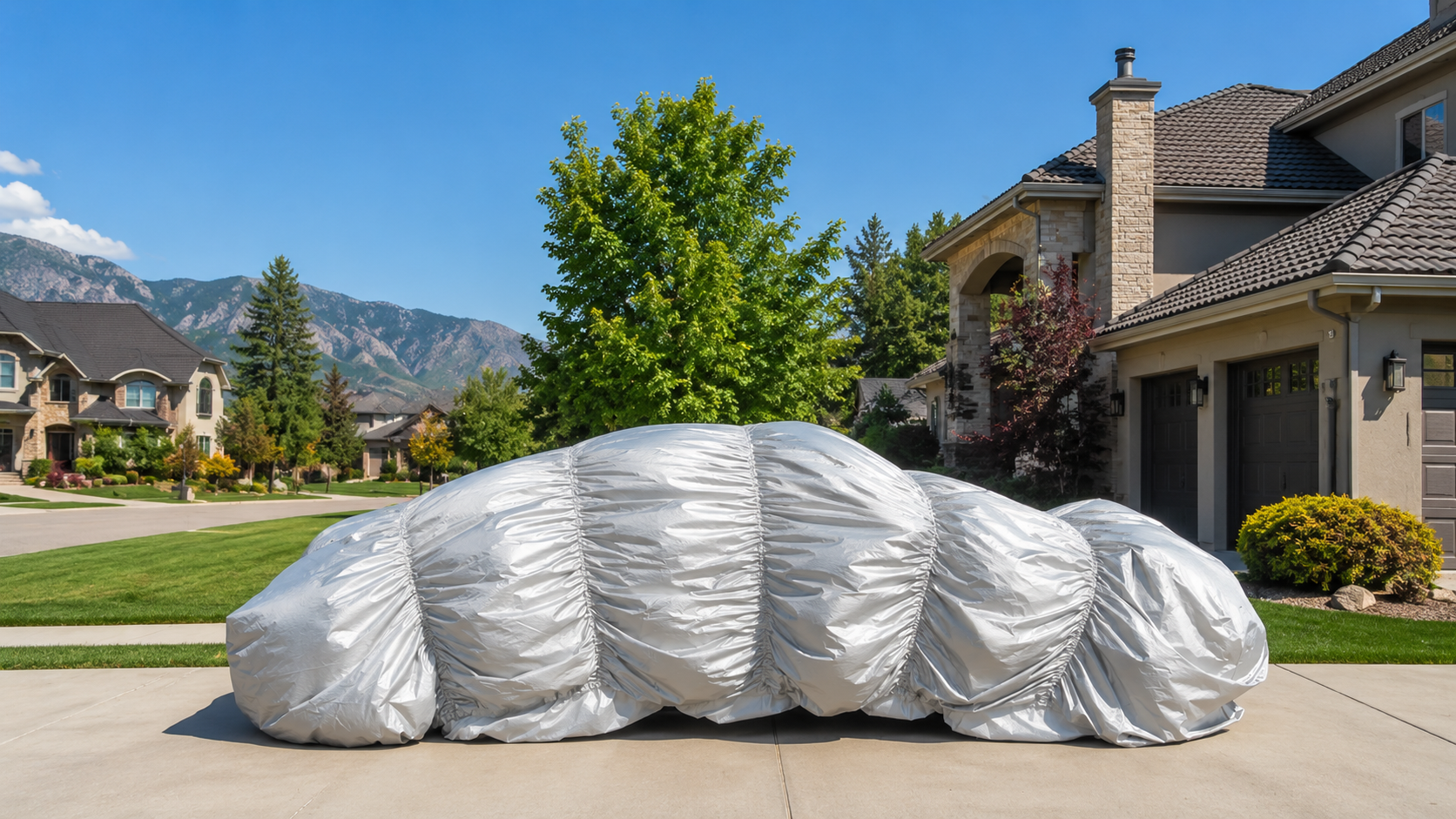
A heavy-duty vehicle cover provides valuable protection when permanent shelter isn’t available.
Unlike standard dust covers, hail-resistant covers include multiple layers of padding that help absorb impacts before they reach your paintwork.
When choosing a cover, look for features such as:
A properly fitted cover stays in place during storms and offers much better protection than loose universal covers.
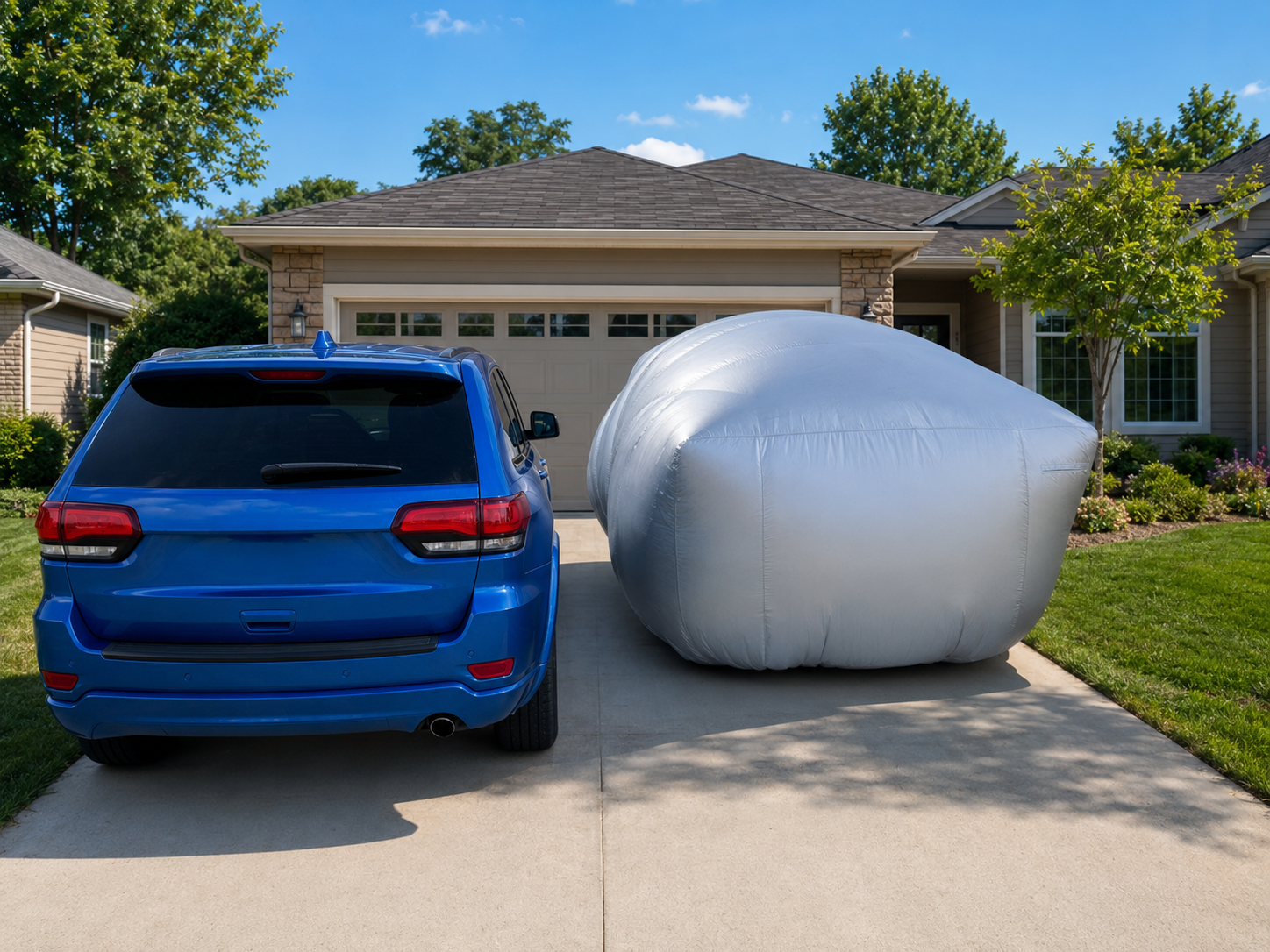
Portable car shelters have become increasingly popular in regions that frequently experience severe weather.
These temporary structures are easy to assemble and can protect your vehicle at home or while traveling. Depending on your needs, options include foldable garages, pop-up canopies, inflatable shelters, and mobile vehicle tents.
Although they require storage space, they can save thousands of dollars in potential repair costs after a major hailstorm.
Paint Protection Film (PPF) has become one of the most effective long-term solutions for protecting automotive paint.
PPF is a transparent polyurethane film professionally installed over painted surfaces. It creates a durable barrier that helps absorb everyday impacts while preserving your vehicle’s factory finish.
Although Paint Protection Film cannot completely prevent dents caused by extremely large hailstones, it offers several important benefits.
The flexible film helps reduce the force transferred to the paint surface, lowering the risk of chips and minor surface damage. It also protects against scratches created by flying debris during storms.
Many premium PPF products also feature self-healing technology, allowing fine scratches and swirl marks to disappear when exposed to heat.
Beyond hail protection, PPF guards against:
This makes it an excellent investment even in areas that experience only occasional hail.
While PPF provides outstanding paint protection, it’s important to have realistic expectations.
Very large hailstones can still dent metal body panels because the impact force exceeds what the protective film can absorb.
For the best protection, PPF should be combined with covered parking, weather monitoring, and emergency protective measures during severe storms.
Professional installation is equally important. Poorly installed film may lift, bubble, or fail to provide consistent protection.
Modern weather forecasting makes it much easier to prepare for approaching storms.
Many weather applications now provide severe storm notifications hours before hail develops. These alerts give you enough time to relocate your vehicle to a safer location before conditions become dangerous.
If you live in an area where hailstorms occur regularly, enabling severe weather notifications on your smartphone can make a significant difference.
Sometimes hail develops while you’re away from home and covered parking isn’t available.
If you’re safely parked, adding temporary padding over your vehicle can reduce the impact of falling hail.
Items commonly used include thick moving blankets, comforters, heavy towels, cardboard sheets, or even your vehicle’s floor mats placed over the hood, roof, windshield, and rear glass.
These emergency measures won’t stop severe hail entirely, but they may reduce dents and cracked glass during smaller storms.
Always prioritize your personal safety over protecting your vehicle. Never stop in traffic or park in unsafe locations simply to avoid hail.
Once the weather has completely cleared, inspect your vehicle carefully in daylight.
Pay close attention to the:
Small dents are often difficult to notice under poor lighting, so inspect from multiple angles.
If you discover damage, photograph everything before scheduling repairs or contacting your insurance provider.
Even small paint chips should be repaired promptly.
When paint is damaged, moisture reaches the exposed metal underneath, increasing the likelihood of corrosion and rust.
Minor dents without paint damage are often ideal candidates for Paintless Dent Repair (PDR). This repair method restores body panels without repainting the vehicle, helping preserve the original factory finish while reducing repair costs.
Many comprehensive auto insurance policies include hail damage coverage.
Before filing a claim, compare your repair estimate with your deductible. For very minor cosmetic damage, paying out of pocket may be more economical.
Following widespread hailstorms, repair shops often become fully booked for weeks, so scheduling inspections and repairs as early as possible is recommended.
The most effective hail protection doesn’t rely on one product alone.
Instead, combine several preventative measures throughout the year. Parking under cover whenever possible, using a quality protective cover, installing Paint Protection Film, monitoring severe weather alerts, and acting quickly before storms arrive all work together to minimize damage.
Taking a proactive approach not only protects your vehicle’s appearance but also helps maintain its resale value and reduces future repair expenses.
Hailstorms are unpredictable, but the damage they cause doesn’t have to be. Preparing in advance is far easier and less expensive than repairing dents, replacing glass, or repainting damaged panels after a storm.
Simple habits like choosing covered parking, using a padded car cover, monitoring weather alerts, and investing in professional Paint Protection Film can dramatically improve your vehicle’s defense against severe weather.
Whether you drive every day or own a prized weekend vehicle, protecting your investment today can save significant time, money, and frustration in the future. If you’re ready to grow your business with results-driven SEO, contact us today for a free consultation.
Does Paint Protection Film prevent hail damage?
Paint Protection Film helps reduce paint chips, scratches, and minor impact damage from small hailstones. While it cannot completely stop dents from large hail, it adds an important protective layer that minimizes surface damage.
Is a garage the best protection against hail?
Yes. Parking inside a fully enclosed garage is the most effective way to protect your vehicle from hail, heavy rain, falling debris, and prolonged sun exposure.
Can a regular car cover protect against hail?
A standard car cover offers limited protection. For better results, choose a specially designed padded hail-resistant cover that absorbs impacts more effectively.
Should I park under a tree during a hailstorm?
Only if no safer option exists. Strong winds can break branches, causing more severe damage than the hail itself.
What should I do immediately after hail damages my car?
Inspect the vehicle in daylight, take clear photographs of all damage, repair chipped paint promptly to prevent rust, and contact your insurance provider if repairs exceed your deductible.
How often should I detail my car after installing Paint Protection Film?
Regular washing every two to four weeks and periodic inspections help maintain the film. Professional maintenance and proper cleaning methods will maximize the lifespan and performance of your Paint Protection Film.
I am Shofiul Alam Tanvir, a top-rated Fiverr, SeoClerk and Upwork freelancer and one of the leading advanced SEO experts in the USA. With over five years of dedicated experience, I specialize in delivering high-impact, data-driven search engine optimization strategies.
©2026. Shofiul Alam Tanvir. All Rights Reserved.
Terms & Conditions
Privacy Policy