

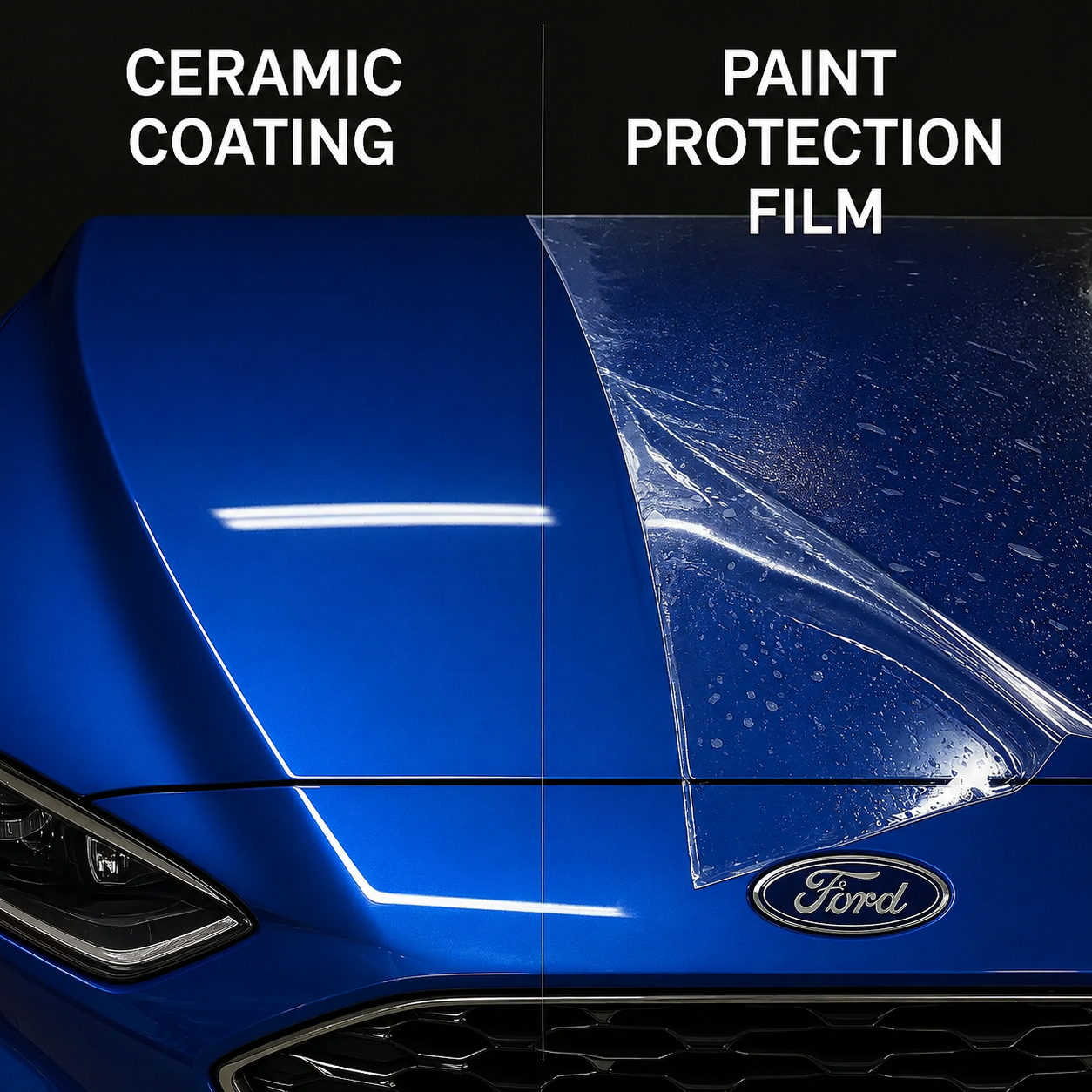
Protecting your vehicle’s paint is one of the best ways to preserve its appearance, reduce maintenance, and maintain resale value. If you’ve researched paint protection options, you’ve likely come across two popular solutions: ceramic coating and paint protection film (PPF).
Although both products help keep your vehicle looking newer for longer, they serve different purposes. Understanding how each option works will help you choose the right level of protection for your driving habits, budget, and expectations.
In this guide, we’ll break down the differences between ceramic coating and PPF, explain their strengths and limitations, and help you decide whether one or a combination of both is the best fit for your vehicle.
Ceramic coating is a liquid polymer infused with silicon dioxide (SiO2) that chemically bonds with your vehicle’s clear coat.
Once cured, it creates a durable, semi-permanent protective layer that helps shield the paint from environmental contaminants and everyday wear.
Unlike traditional waxes or sealants that sit on the surface and wear away quickly, ceramic coatings bond at a molecular level to deliver long-lasting protection.
Key Benefits of Ceramic Coating
Paint protection film, often called clear bra, is a transparent urethane film installed directly over painted surfaces.
Unlike ceramic coating, PPF creates a physical barrier between your vehicle and the outside environment.
The film absorbs impacts from road debris, helping prevent rock chips, scratches, and other physical damage that can permanently affect your paint.
Many premium PPF products also feature self-healing technology that allows minor swirl marks and scratches to disappear when exposed to heat.
Key Benefits of PPF
The biggest difference between ceramic coating and PPF is the type of protection they provide.
Ceramic coating protects against environmental and chemical damage.
PPF protects against physical damage and impacts.
Think of it this way:
Neither product completely replaces the other because they solve different problems.
|
Feature |
Ceramic Coating |
Paint Protection Film (PPF) |
|
UV protection |
Yes |
Limited |
|
Water repellency |
Excellent |
Moderate |
|
Chemical resistance |
Excellent |
Good |
|
Gloss enhancement |
Excellent |
Minimal |
|
Easier cleaning |
Yes |
Somewhat |
|
Rock chip protection |
No |
Yes |
|
Scratch resistance |
Minor protection |
Excellent |
|
Self-healing |
No |
Yes |
|
Durability |
1–5+ years |
5–10 years |
|
Coverage |
Entire vehicle |
High-impact areas or full vehicle |
|
Removability |
No |
Yes |
|
Typical cost |
Lower |
Higher |
The answer depends on the type of damage you want to prevent.
If your biggest concerns are:
Ceramic coating is often the better choice.
If you frequently deal with:
PPF provides superior protection.
Ceramic coating is the clear winner when it comes to visual enhancement.
The coating intensifies gloss, adds depth to the paint, and creates a sleek, reflective finish.
PPF is designed to be nearly invisible. While it helps preserve the original appearance of your paint, it does not significantly improve gloss or color depth.
For drivers who want a showroom-quality finish, ceramic coating delivers the greatest visual impact.
Ceramic coating simplifies routine maintenance thanks to its hydrophobic properties.
Water beads and rolls off the surface, carrying dirt and contaminants with it. This means:
PPF requires regular cleaning as well, but it does not offer the same level of water repellency unless it is topped with a ceramic coating.
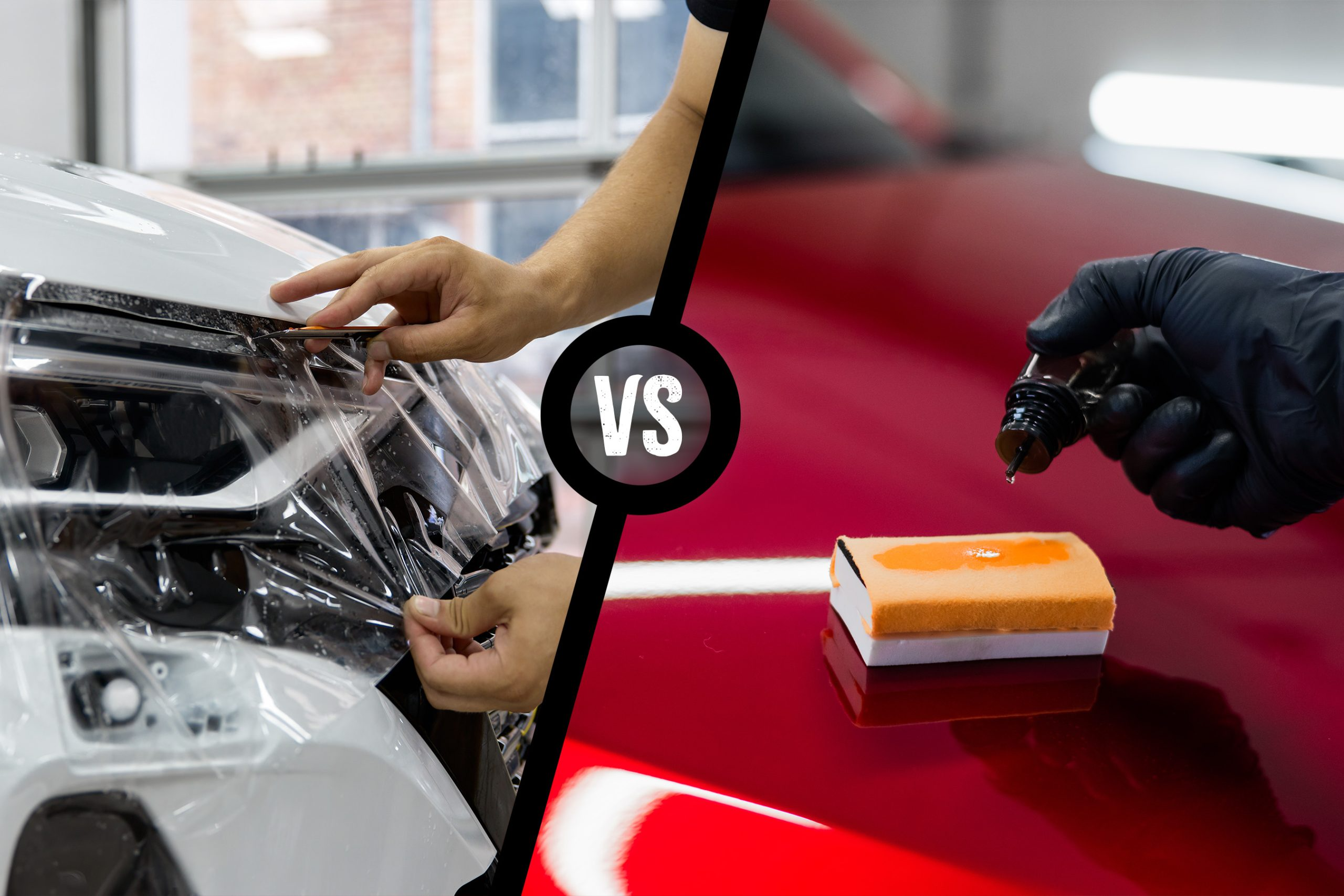
Longevity varies based on product quality, installation, climate, and maintenance.
Typical lifespan expectations:
Although PPF generally lasts longer, it is also more expensive and may require replacement if damaged.
Ceramic coating is typically more affordable than PPF.
Average professional installation costs:
The complexity of PPF installation makes professional application essential, while some ceramic coatings can be successfully applied at home.
Absolutely.
Many vehicle owners choose both products for complete protection.
A common strategy is:
This approach combines the strengths of both products:
Together, they create the most comprehensive paint protection system available.
Ceramic coating is ideal for:
PPF is best for:
Ceramic coating and PPF are not competing products they are complementary solutions designed to address different types of damage.
Choose ceramic coating if your priorities are gloss, UV protection, and easier maintenance.
Choose PPF if you need maximum defense against rock chips, scratches, and road debris.
For the highest level of protection, combine both.
By understanding the strengths of each option, you can make an informed decision that protects your vehicle’s appearance and value for years to come. If you’re ready to grow your business with results-driven SEO, contact us today for a free consultation.
No. Ceramic coating is not designed to absorb impacts from stones or road debris. If rock chip protection is your priority, PPF is the better solution.
PPF offers some resistance to dirt and contaminants, but it is not as hydrophobic as ceramic coating. Applying a ceramic coating over PPF can make cleaning significantly easier.
Yes. Many vehicle owners apply ceramic coating on top of PPF to improve water repellency, add UV protection, and enhance gloss.
PPF is generally more expensive due to material costs and the complexity of installation. Ceramic coating is typically the more affordable option.
Both can help preserve resale value. PPF prevents physical damage, while ceramic coating maintains paint appearance and reduces environmental wear. Combining both provides the greatest long-term benefit.
I am Shofiul Alam Tanvir, a top-rated Fiverr, SeoClerk and Upwork freelancer and one of the leading advanced SEO experts in the USA. With over five years of dedicated experience, I specialize in delivering high-impact, data-driven search engine optimization strategies.
©2026. Shofiul Alam Tanvir. All Rights Reserved.
Terms & Conditions
Privacy Policy