

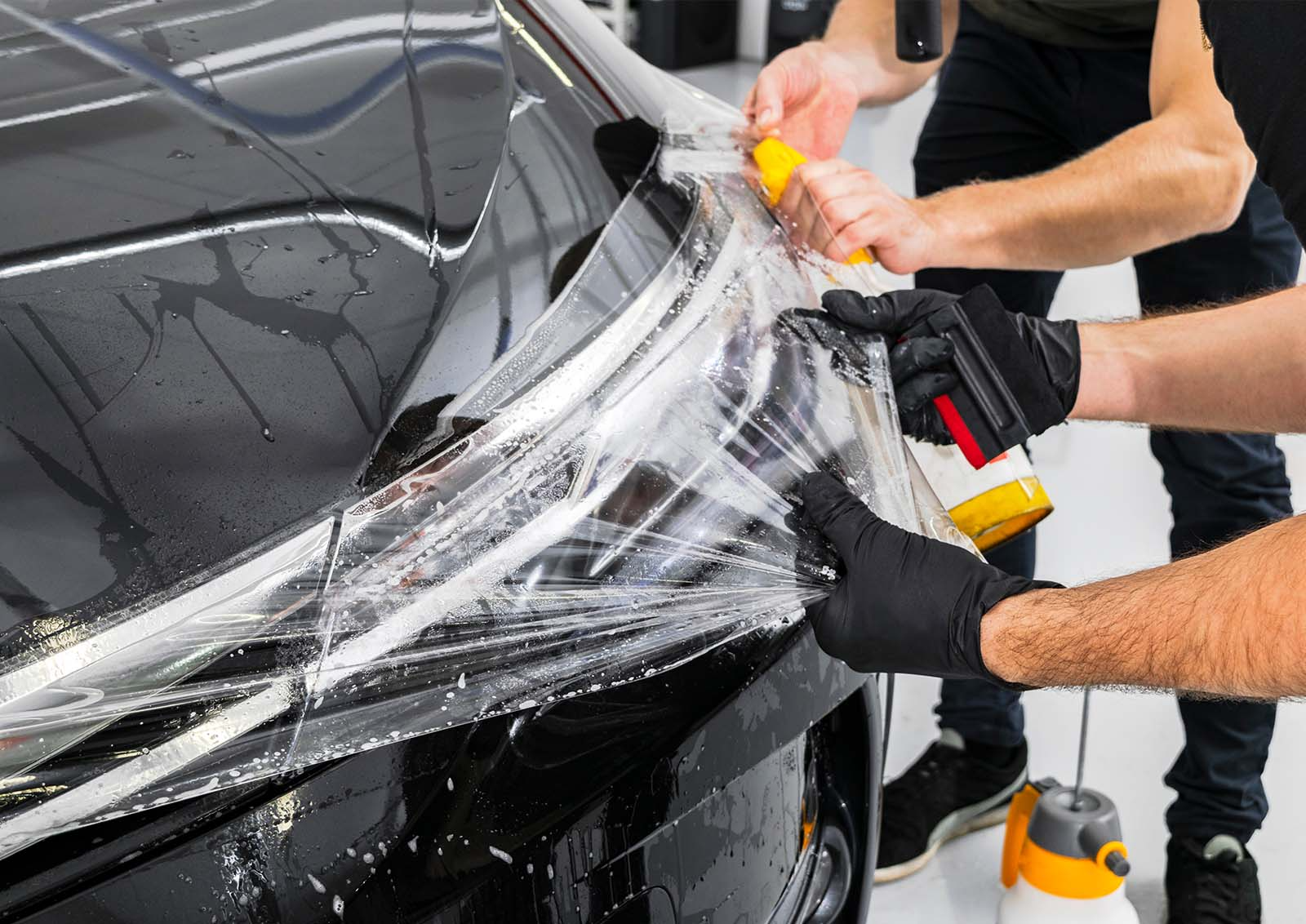
Your vehicle faces daily threats every time you hit the road. Rock chips, road debris, bug splatter, bird droppings, UV rays, and minor scratches can gradually damage your car’s paint and reduce its value.
That’s where Paint Protection Film (PPF) comes in.
Often referred to as an invisible shield for your vehicle, PPF is designed to preserve your factory finish and protect your investment from everyday wear and tear. Whether you drive a luxury car, sports car, SUV, or daily commuter, paint protection film offers long-term benefits that go far beyond appearance.
In this guide, we’ll explain what PPF is, how it works, its key benefits, and how it compares to other paint protection options.
Paint Protection Film, commonly known as PPF or clear bra, is a transparent polyurethane film applied directly to a vehicle’s painted surfaces.
The film creates a protective barrier between your car’s paint and external elements that can cause damage. While traditional PPF is nearly invisible, modern options are also available in matte, satin, and colored finishes for drivers who want both protection and customization.
Most automotive paint protection films range between 6 and 8 mils thick, making them durable enough to withstand impacts while remaining flexible enough to conform to complex curves and contours.
PPF can be installed on the entire vehicle or only on high-impact areas such as:
Paint protection film works by absorbing and dispersing impact energy before it reaches your vehicle’s paint.
When road debris, small stones, or other hazards strike the film, the force is spread across the material instead of directly impacting the painted surface underneath.
This protective layer helps prevent common paint damage, including:
Unlike waxes or sealants, PPF provides physical protection rather than simply adding a sacrificial coating.
Modern paint protection film is engineered with multiple layers that work together to maximize durability and performance.
The adhesive layer bonds the film securely to the vehicle’s paint.
High-quality adhesives are designed to create a strong attachment while allowing installers to reposition the film during installation for precise alignment.
Premium adhesives also ensure the film can be removed safely without damaging the factory paint or leaving behind residue.
The thermoplastic polyurethane (TPU) layer forms the core of the film.
TPU is a flexible and impact-resistant material that absorbs damage from road debris and resists scratches, stains, and UV exposure.
The quality of this layer largely determines how well the film performs over time.
The outer layer is responsible for the film’s self-healing capabilities, stain resistance, and hydrophobic properties.
Many premium films feature elastomeric or ceramic-infused top coats that allow minor scratches and swirl marks to disappear when exposed to heat.
Heat sources that activate self-healing properties include:
This technology helps the film maintain a smooth, glossy appearance for years.
PPF offers far more than basic scratch resistance.
One of its biggest advantages is preserving your vehicle’s original paint condition. Since factory paint is difficult and expensive to replicate, protecting it helps maintain resale value.
Paint protection film also shields your vehicle from environmental hazards such as bug splatter, bird droppings, tree sap, road salt, and harmful UV rays.
Many modern films include hydrophobic properties that repel water and make cleaning easier by preventing dirt and contaminants from sticking to the surface.
For drivers who want peace of mind, PPF provides continuous protection without changing the appearance of the vehicle.
Not all paint protection films deliver the same level of performance.
The quality of the adhesive, TPU layer, and top coat can vary significantly between manufacturers.
Lower-quality films may yellow, crack, peel, or lose clarity over time. Premium films are designed to remain clear and durable for many years.
When choosing a paint protection film, consider factors such as:
Equally important is selecting an experienced installer. Even the best film can fail prematurely if it is installed incorrectly.
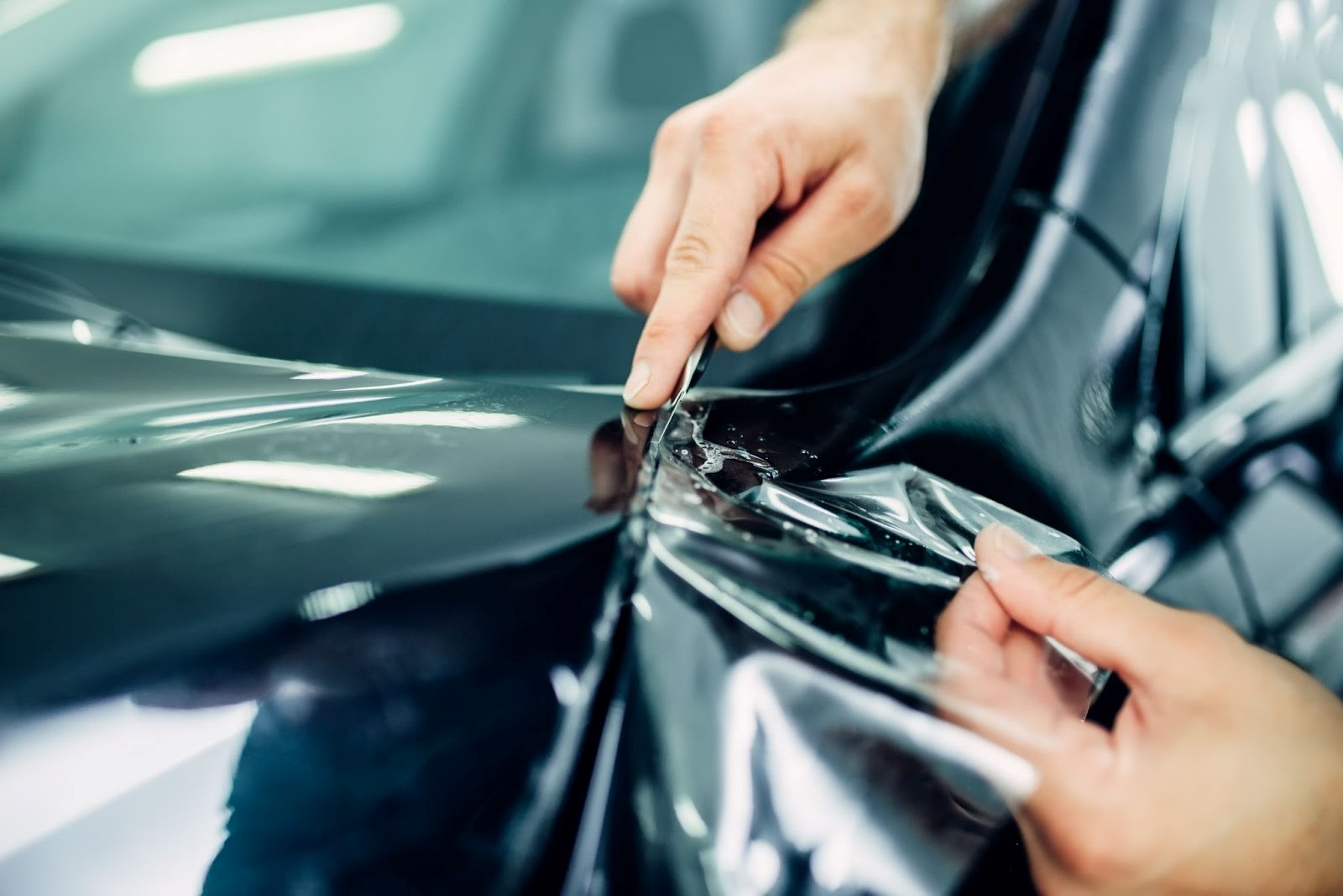
Protecting your entire vehicle isn’t always necessary.
Many car owners choose partial coverage packages that focus on high-impact areas most vulnerable to damage.
Front-end packages typically include the hood, front bumper, fenders, and side mirrors because these areas encounter the most road debris.
Others prefer full-body coverage for maximum protection and complete peace of mind.
High-contact areas, such as rear bumpers and cargo loading zones, are also worth considering because they often develop scratches from everyday use.
The cost of PPF varies depending on several factors, including vehicle size, coverage area, film quality, and installer expertise.
Partial front-end protection generally ranges from $1,500 to $3,000, while full-body installations can cost between $5,000 and $8,000 or more.
Although PPF requires an upfront investment, many vehicle owners find that preventing paint repairs, repainting costs, and loss of resale value makes it worthwhile.
Paint protection film and vinyl wraps may look similar, but they serve very different purposes.
PPF is designed primarily for protection. It offers impact resistance, self-healing technology, and superior durability while preserving the original paint.
Vinyl wraps are intended for customization and style. They come in a wide range of colors, finishes, and textures but provide limited protection against physical damage.
If your goal is to safeguard your vehicle’s paint from everyday hazards, PPF is the better choice.
If you’re looking to completely change your vehicle’s appearance, a vinyl wrap may be the right option.
Some modern colored PPF products offer the best of both worlds by combining style with advanced paint protection.
If you want to keep your vehicle looking newer for longer, paint protection film is one of the most effective solutions available.
PPF helps preserve your factory paint, reduces maintenance, minimizes repair costs, and protects your vehicle from everyday damage.
For drivers who value long-term appearance, resale value, and peace of mind, investing in high-quality film and professional installation can deliver years of protection.
Paint protection film acts as an invisible armor for your vehicle, defending it against rock chips, scratches, UV damage, and environmental contaminants.
Thanks to modern innovations like self-healing technology and hydrophobic top coats, today’s PPF offers better performance and durability than ever before.
Whether you choose partial coverage or a full-body wrap, selecting premium film and an experienced installer is essential to achieving the best results.
Protecting your vehicle today can help preserve its appearance and value for years to come. If you’re ready to grow your business with results-driven SEO, contact us today for a free consultation.
I am Shofiul Alam Tanvir, a top-rated Fiverr, SeoClerk and Upwork freelancer and one of the leading advanced SEO experts in the USA. With over five years of dedicated experience, I specialize in delivering high-impact, data-driven search engine optimization strategies.
©2026. Shofiul Alam Tanvir. All Rights Reserved.
Terms & Conditions
Privacy Policy